Specialty Lawn Services
Shade Lawn Solutions in Frederick, MD
Shade-tolerant grass selection and maintenance adjustments for Frederick lawns under mature tree canopy — working with the light conditions that exist rather than fighting them season after season.
Tall fescue tolerates partial shade (3 to 4 hours of direct sun) but thins progressively in full-canopy conditions. Fine fescue blends are more shade-tolerant and better suited to areas where tall fescue consistently fails.
Shade lawns should be mowed at the upper end of the height range — 3.5 to 4 inches for fescue in shade — to maximize the leaf blade available for photosynthesis in reduced light conditions.
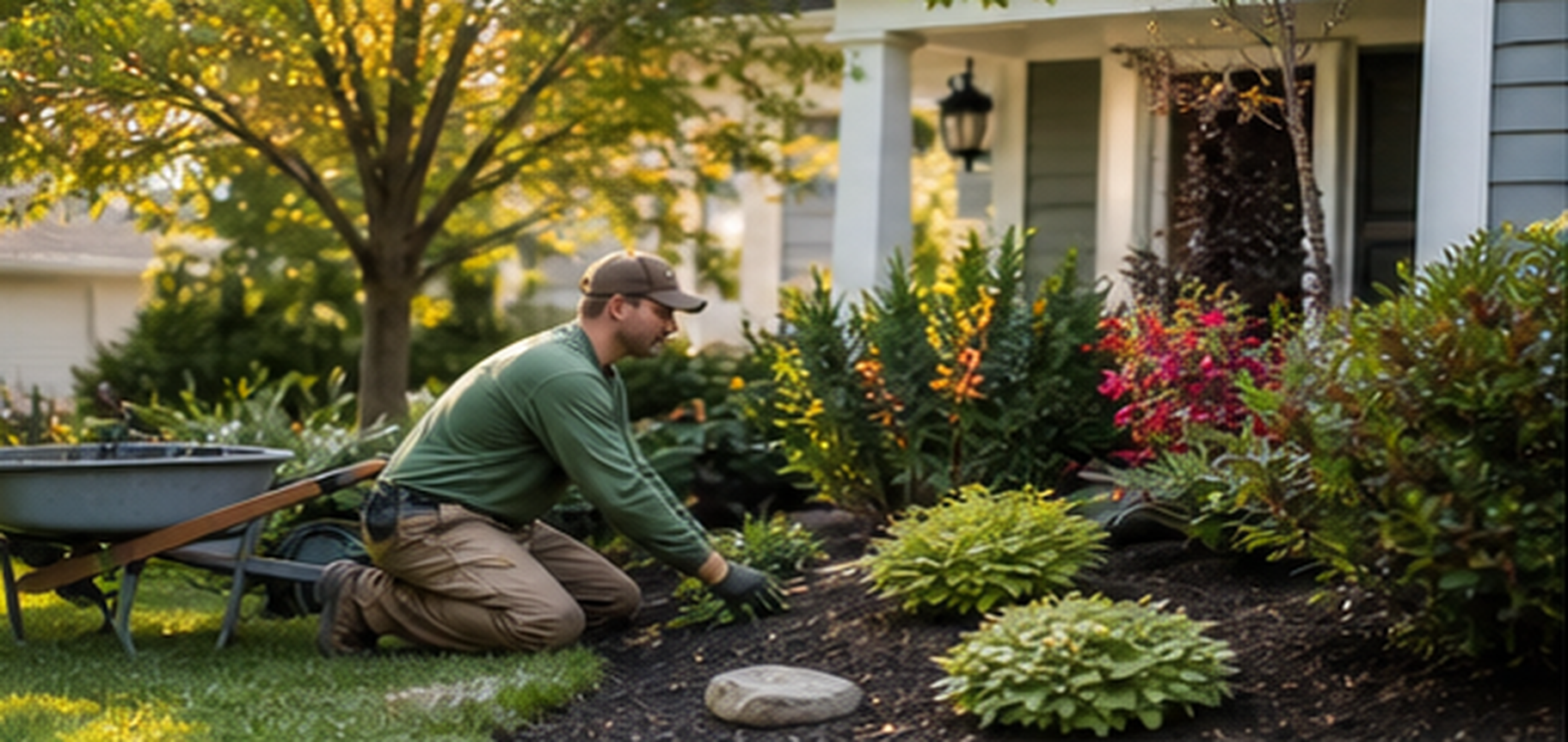
Dense-shade areas under Frederick's mature oak and maple canopy may not sustain grass regardless of species. In these zones, a ground cover or mulched bed approach may be more appropriate than continued turf attempts.
Shade Lawn Solutions
Managing Shade Lawns in Frederick
Frederick's mature residential neighborhoods have significant deciduous tree canopy — oaks, maples, tulip poplars, and sweetgums that produce dense shade from May through October. Tall fescue, the standard lawn grass in Frederick County, grows in partial shade but progressively thins under full canopy. Homeowners often interpret this as a soil problem, fertilization deficiency, or disease — and apply treatments that don't address the underlying cause: insufficient light. Managing a shade lawn correctly means choosing a more shade-tolerant species for low-light areas, adjusting mowing height upward to preserve more blade area for light capture, reducing foot traffic in shade areas where recovery is slower, and accepting that the densest-canopy zones may need an alternative to grass entirely.
Fine Fescue for Shade Lawns in Frederick
Fine fescue species — creeping red fescue (Festuca rubra), hard fescue (Festuca brevipila), Chewings fescue (Festuca rubra commutata), and sheep fescue (Festuca ovina) — are significantly more shade-tolerant than tall fescue and are the recommended alternative for Frederick lawns with partial to moderate shade. Fine fescue blends are available as seed and can be overseeded into thin shade areas during the fall window. They require less fertilizer than tall fescue, are drought-tolerant once established, and grow more slowly, which means lower mowing frequency. The trade-off is that fine fescue species are less wear-tolerant than tall fescue — high-traffic shade areas may still struggle regardless of species. We assess the specific light and traffic conditions before recommending a conversion from tall fescue to fine fescue blend in shade areas.
Mowing Adjustments for Shade Areas
In shaded sections of a Frederick lawn, we raise the mowing height to 3.5 to 4 inches. The taller blade height allows more surface area for light capture in reduced-light conditions. Mowing the shade areas at the same height as the full-sun sections of the lawn removes a proportionally larger share of the available photosynthesis capacity in the plant.
When to Accept a Non-Turf Ground Cover
Full-canopy areas under Frederick's mature oaks — less than 2 hours of direct sun, combined with root competition from surface-feeding trees — often cannot sustain any grass long-term. We recommend transitioning these zones to shade-tolerant ground covers (pachysandra, vinca, native ferns, sweet woodruff) or mulched beds rather than continuing annual overseeding cycles that provide only temporary coverage.
Shade Lawn Approach
Light Assessment
We measure the shade conditions in problem areas — hours of direct sun, canopy type, root competition — to determine whether grass can be established sustainably.
Species Recommendation
Based on light conditions, we recommend tall fescue, fine fescue blend, or a transition to ground cover depending on what the specific area can actually support.
Fall Seeding
For areas with sufficient light for grass, fine fescue or improved tall fescue is seeded in the fall window with aeration for seed-to-soil contact.
Maintenance Adjustment
Mowing height, fertilization rate, and frequency are adjusted for shade sections — different from the full-sun turf areas of the same property.
Assess Your Frederick Shade Lawn
Tell us your shade conditions and current lawn state — we'll provide a realistic assessment of what will and won't work in your specific situation.
What grass grows in full shade in Frederick?
No grass grows reliably in full shade — less than 2 hours of direct sun — in Frederick. Fine fescue blends tolerate the most shade of any turf species used in Maryland, handling 3 to 4 hours of dappled light. Below that threshold, ground covers or mulched beds are a more sustainable choice than repeated grass establishment attempts.
My lawn thins every year under my oak tree. What can I do?
Mature oaks in Frederick create a difficult combination of dense summer shade, surface root competition, and leaf acidification of the soil. This is one of the hardest shade problems to solve with grass. Options include fine fescue overseeding in fall (temporary improvement), thinning lower oak branches to increase light penetration (arborist work), or transitioning the area under the drip line to shade-tolerant ground cover or a mulched bed.
Should I fertilize a shaded lawn differently?
Yes. Shade-grown turf is already stressed by low light and doesn't benefit from the same nitrogen rates used on full-sun sections. Excessive nitrogen in shade areas promotes disease and forces growth that the light conditions can't sustain. We recommend reduced fertilization rates — roughly half the application rate of sun areas — for shaded turf sections.
Lawn Overseeding
Fall overseeding with shade-tolerant fine fescue blends for Frederick lawns with partial canopy cover.
Mulch Installation
Mulched bed installation as an alternative to turf in dense-shade zones where grass won't establish.
Pet Damage Repair
Repair for Frederick lawns with combined shade and pet traffic challenges — the hardest recovery combination.